The Fund delivered positive returns but lagged peers as AI-driven mega-caps and large caps dominated markets. Strong contributors included Alphabet, Cadence, Advantest, Oxford Biomedica and Helios Towers, while healthcare exposure and selective additions supported long-term positioning. Fixed income outperformed, with credit strength offsetting weaker UK government bonds.
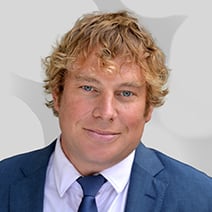
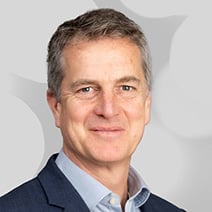
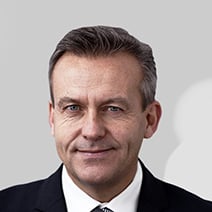
Peter: The quarter to the end of September saw positive absolute returns, but these were behind the strong returns posted by the peer group. Global equity indices continue to be led by the remarkable rise of AI-focused technology stocks. This small group of technology companies is where the vast majority of equity returns have been concentrated. Our Sustainable Future process looks to find growth opportunities from a wide range of themes. Over the long term, this diversification has been a good strategy. However at the moment, with our underweight position to that single theme of AI which is driving markets, it's difficult for our global equity portfolio to keep pace. The other aspect of our portfolios is their skew to mid-cap companies. Again, longer term, this has proven to be beneficial, but in the last two years leadership has come from larger companies.
Peter: Looking in more detail at the equity portfolios, top performers within the equity portfolio included Alphabet, Cadence Design Systems, and Advantest. Advantest shares gained after raising its full-year operating profit forecast by 24%, reflecting strong demand for semiconductor testing equipment used in AI applications. London Stock Exchange Group and Morningstar were among the detractors though. They faced investor concerns that their business model could face disruption from advances in AI. We believe these are overstated.
Peter: We added Service Titan. This company provides a software platform for tradespeople, such as plumbers and electricians, helping them operate more efficiently, scale faster and build resilience. We also added Zscaler that provides cybersecurity against the rising threat backdrop.
Simon: One theme we are particularly exposed to longer term and continue to build within the fund is healthcare. This is an area that's performed poorly over the last couple of years after strong performance during the pandemic. We are heavily invested in areas such as life sciences with names such as Thermo Fisher and Agilent Technologies. These companies provide the technology used by customers in the biotechnology and pharmaceutical industries to find solutions to unmet medical needs, such as the vaccine which was so rapidly deployed during the COVID pandemic. We believe that the healthcare industry has much further to go in terms of finding medical solutions to disease, particularly in areas such as cancer, autoimmune disease, rare disease, and neurological diseases such as Parkinsons and Alzheimers. We believe the investment the industry will make to solve these diseases will drive performance for these companies, despite the recent weak stock market performance.
Peter: In UK equities, I would highlight the strong performance from Oxford Biomedica, the cell and gene therapy manufacturing organisation. This is held under our Enabling Innovation in Healthcare theme. Shares in the company climbed following the completion of a £60m capital raise through a placing and subscription of new shares. I'd also highlight Helios Towers. It operates and builds new telecom towers in Africa and the Middle East. As they add mobile operators to each tower, so operational gearing comes through for the business.
Kenny: Over the third quarter, the fixed income exposure in the Managed Funds outperformed its benchmark. Credit was the key contributor to the outperformance, whilst despite facing some unfavourable headwinds, credit spreads on the index tightened by 16 basis points. Our UK government bond exposure had a negative impact on performance as our long duration position worked against us as UK government bond yields moved higher over the quarter, although this was partially offset by being underweight to this asset class. Over Q3, credit markets remained robust, supported by strong investor demand, limited primary issuance and healthy corporate fundamentals. These favourable technical conditions contributed to persistent spread tightening across investment grade indices, reinforcing credit's resilience, despite some broader political and fiscal uncertainties. The Fund benefited from positive security selection, particularly in the insurance sector. In the US, a key theme was growing signs of weakness in the US labour market. A key catalyst was the jobs report for July, which was a lot lower than expected and included historic downward revisions. This led to a pivot and a dovish direction by the Fed, with Chair Powell describing the labour market as "not particularly tight and facing increasing downside risks". This was one of the main reasons why the Federal Reserve cut interest rates by 25 basis points in late September, its first cut in 2025. In the UK, signals from the UK macroeconomic backdrop were mixed over the quarter. Labour indicators softened and vacancies cooled, while inflation was generally firmer than expected. The Bank of England cut rates by 25 basis points to 4% but paired the cut with a notably hawkish message and an unusually split vote, prompting markets to price out further near-term easing. Growth and inflation beats owed more to public spending and volatile components than private demand, while persistent fiscal debate weighed on the long end of the yield curve. Recent political events and shifting trade policies have contributed to increased market volatility. Despite this, we believe our high-quality corporate holdings remain fundamentally robust. If valuations become more attractive, we may look to selectively add credit exposure, though we remain prudent given the uncertain backdrop. We also see potential for capital gains should government bond yields fall, and we continue to maintain a long-duration stance. Combining current credit spreads with elevated gilt yields, all in yields above 5% remain compelling value for corporate bonds.
Simon: Our asset allocation positioning remained unchanged over the quarter. We maintained overweight positions in both global and UK equities, and underweight positions in cash and government bonds. We remain neutral on UK and European corporate bonds. We believe broader global economic activity is nearing an inflection point despite sluggish growth outside sectors benefiting from the ongoing AI infrastructure buildout. Equity markets have also been supported by interest rate cuts implemented during 2025. While credit remains fundamentally attractive, concerns about the impact of fiscal pressures in the UK on gilt yields leads us to retain a neutral stance on credit and an underweight position in gilts.
Peter: The outlook for our style of equity investing and the Sustainable Future Managed Funds is positive. We focus on mid-cap quality growth companies that are benefiting from our sustainable themes. Our analysis suggests that these will continue to deliver strong growth over the coming years and yet these companies are trading at significant valuation discounts to their historic average.
KEY RISKS
Past performance does not predict future returns. You may get back less than you originally invested.
We recommend this fund is held long term (minimum period of 5 years). We recommend that you hold this fund as part of a diversified portfolio of investments.
The Funds managed by the Sustainable Investment team:
- Are expected to conform to our social and environmental criteria.
- May hold overseas investments that may carry a higher currency risk. They are valued by reference to their local currency which may move up or down when compared to the currency of a Fund.
- May hold Bonds. Bonds are affected by changes in interest rates and their value and the income they generate can rise or fall as a result; The creditworthiness of a bond issuer may also affect that bond's value. Bonds that produce a higher level of income usually also carry greater risk as such bond issuers may have difficulty in paying their debts. The value of a bond would be significantly affected if the issuer either refused to pay or was unable to pay.
- May encounter liquidity constraints from time to time. The spread between the price you buy and sell shares will reflect the less liquid nature of the underlying holdings.
- May invest in smaller companies and may invest a small proportion (less than 10%) of the Fund in unlisted securities. There may be liquidity constraints in these securities from time to time, i.e. in certain circumstances, the fund may not be able to sell a position for full value or at all in the short term. This may affect performance and could cause the fund to defer or suspend redemptions of its shares. May invest in companies listed on the Alternative Investment Market (AIM) which is primarily for emerging or smaller companies. The rules are less demanding than those of the official List of the London Stock Exchange and therefore companies listed on AIM may carry a greater risk than a company with a full listing.
- May, under certain circumstances, invest in derivatives, but it is not intended that their use will materially affect volatility. Derivatives are used to protect against currencies, credit and interest rate moves or for investment purposes. There is a risk that losses could be made on derivative positions or that the counterparties could fail to complete on transactions. The use of derivatives may create leverage or gearing resulting in potentially greater volatility or fluctuations in the net asset value of the Fund. A relatively small movement in the value of a derivative's underlying investment may have a larger impact, positive or negative, on the value of a fund than if the underlying investment was held instead. The use of derivative instruments that may result in higher cash levels. Cash may be deposited with several credit counterparties (e.g. international banks) or in short-dated bonds. A credit risk arises should one or more of these counterparties be unable to return the deposited cash.
- Do not guarantee a level of income.
The risks detailed above are reflective of the full range of Funds managed by the Sustainable Investment team and not all of the risks listed are applicable to each individual Fund. For the risks associated with an individual Fund, please refer to its Key Investor Information Document (KIID)/PRIIP KID.
The issue of units/shares in Liontrust Funds may be subject to an initial charge, which will have an impact on the realisable value of the investment, particularly in the short term. Investments should always be considered as long term.
DISCLAIMER
This material is issued by Liontrust Investment Partners LLP (2 Savoy Court, London WC2R 0EZ), authorised and regulated in the UK by the Financial Conduct Authority (FRN 518552) to undertake regulated investment business.
It should not be construed as advice for investment in any product or security mentioned, an offer to buy or sell units/shares of Funds mentioned, or a solicitation to purchase securities in any company or investment product. Examples of stocks are provided for general information only to demonstrate our investment philosophy. The investment being promoted is for units in a fund, not directly in the underlying assets.
This information and analysis is believed to be accurate at the time of publication, but is subject to change without notice. Whilst care has been taken in compiling the content, no representation or warranty is given, whether express or implied, by Liontrust as to its accuracy or completeness, including for external sources (which may have been used) which have not been verified.
This is a marketing communication. Before making an investment, you should read the relevant Prospectus and the Key Investor Information Document (KIID) and/or PRIIP/KID, which provide full product details including investment charges and risks. These documents can be obtained, free of charge, from www.liontrust.com or direct from Liontrust. If you are not a professional investor please consult a regulated financial adviser regarding the suitability of such an investment for you and your personal circumstances.


