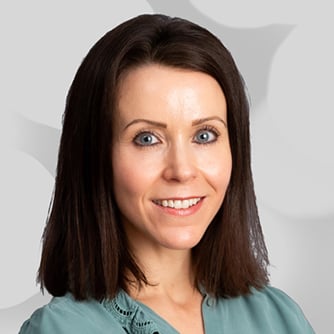
Andrew Denton, CEO of FTSE 250-listed Alfa Financial Software, joins Victoria Stevens for a special live episode of Stock Exchanges, recorded at Liontrust’s Annual Investment Conference. Andrew tells the story of rising from employee number 15 to leading a global platform used by Bank of America and Mercedes-Benz. He also gives his grounded take on artificial intelligence and discusses how hackathons and product development keep Alfa ahead.
 |  |
Podcast theme music supplied by Danny Nugent.
This transcript has been generated using AI transcription tools and may contain inaccuracies or transcription errors. It is provided for general information purposes only and should not be relied upon as a verbatim record of the conversation. For full context and accuracy, please refer to the original audio recording.
Capital at risk. This should not be construed as investment advice.
Victoria [00:00:02] Hi, I'm Victoria Stevens, and welcome to this podcast, Stock Exchanges. In my day job working as a fund manager at Liontrust, investing on behalf of our clients in UK stock market listed companies, I'm fortunate enough to cross paths with some of Britain's most inspiring entrepreneurs. It's a huge privilege to sit across the table from the people who have put their heart and soul into growing and running these companies. And in this series, I want to share that privilege with you, our listeners. Today is a special day for the podcast. We're back with a new episode, and this episode is the first time that we've recorded live in front of a studio audience. It was recorded at King's Place in North London in November with my guest Andrew Denton, the CEO of Alfa Financial Software PLC. I really hope you enjoy the live format. So a very warm welcome to Andrew, who's the Chief Executive of Alfa Financial Software, which is a FTSE 250 business providing enterprise software to the asset financing industry. And Alfa Software very briefly supports the full life cycle of asset financing, from the origination of the loans through invoicing, payments and collections, all the way through to end of lease, remarketing and disposal of assets. And it's used across multiple countries, currencies, languages, from assets as diverse as cars to cranes. It's software which, and I love this phrase, Andrew's described to me before as 'the heart and lungs' of his customers' operations. So it's really critical to ensuring the smooth running of their operations and it's really deeply embedded in what they're doing day to day. And Andrew has just celebrated 30 years at Alfa, having joined as a computer science graduate in 1995, back to that equity ownership mentality and culture. He and the chairman, Andrew Page, still own over half of the business between them. So thank you so much, Andrew, for agreeing to join our conference today to give us an insight into the entrepreneurial journey so far. Andrew [00:02:10] Pleasure. Victoria [00:02:10] And what you're excited about that's yet to come. So I thought we would start, if that's okay with you, if I could ask you to just give one or two minutes, just as a a kind of elevator pitch, if you like, of the business. What makes Alfa special? Andrew [00:02:24] Well you've already done it for me, haven't you? And good afternoon. Victoria promised me an intimate chat, and I feel slightly misled with just a couple of hundred friends in the room, but we'll we'll we'll do our best for you. You said a lot about it. Alfa is very much a heart and lungs solution. We we operate in this thing called the asset finance market, so we're very much aligned to a particular sector, spending a lot of time in the States recently, so I'll say niche, but it's a big niche. Spends about three and a half billion every year on software and related services. And we are comfortably the number one player within that market, with a, I'll be well behaved today, a hundred and twenty-five million consensus. And I know I've conflated two currencies in that, but you can see there's there's a lot of runway there. We absolutely have the best technology, we have the best functionality, we run across thirty-seven countries, and we're quite big these days. But one of the areas that I hope we're going to explore a little bit today, this idea of of culture, because you can do technology, you can do functionality, but actually the thing that we really, really major on, and we are an expensive date, we're very much a differentiated sale. The thing that we major on is our ability to deliver, and we we're only able to deliver because of the the strength of our culture. So I sincerely believe us to be a a purpose driven business, which you don't often hear in a for profit sector. Victoria [00:03:52] And we're absolutely going to get into those cultural aspects. But I wonder whether or not you can just give us a bit of insight into your history with the business. So let's take you back to when you were a fresh faced graduate thirty years ago. You know, what did the first part of your career look like? How did you end up at Alfa? Andrew [00:04:09] I wasn't ever supposed to be in software. I grew up in Suffolk, very much a working class background, and I was absolutely hell bent on being marine biologist. But some of you might cast your mind back to a certain period where there were university grants, which was something I was able to avail myself of. Student loans didn't exist until my second year at university, but it was something I really wanted to do. My parents had a lot of of ambition for me. There's often talk in this world about underserved communities, but there's also underestimated communities and I as a child was absolutely never underestimated. I got a job in the the data processing department of the local factory in Felixstowe. And they seemed to like me and I quite liked technology because my parents had bought me a ZX Spectrum with a whole 48K of memory. They did the big one. I remember my dad queuing for it. So I was quite interested in that and this company, you may have heard of it, it's Schlumberger. They said that they would sponsor me through university, which was amazing. It meant that I could absolutely go. That was the upside, the downside is that marine biology wasn't very useful to a business that made electricity metres. So they said can you do something useful? I said, Yeah. So I did computer science at University and answered an advert that Andrew Page wrote thirty years ago, just about on the back page of the brilliantly named Computer Weekly Magazine. I'm amazed it's never got on 'Have I got News For You' because it's a riveting read. My then boss at Schlumberger taught me to read it from the back to the front, which is cartoons, jobs and then content. So it's probably not the best culture for the first part of my my employment history, but I joined Alfa, then CHP Consulting and the rest is history. Victoria [00:06:06] And it's so inspirational, I think, when you meet an entrepreneur, and you are an entrepreneur, you're not a founder, but you're definitely an entrepreneur in terms of what you've done with Alfa, who's joined the ranks really early on and climbed their way up through them. So it's obviously a very long way from a graduate, a computer science grad joining the business, very junior, to eventually becoming CEO. Tell us in brief terms how that works? Andrew [00:06:31] What's it it it's flown by really. I was employee number fifteen. We are five hundred and eight now. It's probably changed since I read that statistic. It's a pretty fast growing company. A thing about the way that we build the business and there's a lot, that there's recognisable DNA, a lot of recognisable DNA with the business today compared to the the thing that I joined that was then called CHP Consulting back in the day. And and one of the important things for us is that we're a business of practitioners. We don't have out and out straight line salespeople. We have people who actually understand the business domain and have been at the the sharp end of software engineering or the sharp end of systems deployment, and that's really important. So unbelievably, and my colleagues would definitely take the mickey out of me for it now, is I I came in because of my technology prowess. I can assure any potential investors in the audience that there is not a jot of my code in the system today. But but that's what I came in to do. And I did what a lot of people do at Alfa. I did software engineering, I did a bit of project management, I went to do some work at a subsidiary of a of what was then the Royal Bank of Scotland, and of course, noting that all tales get better with the telling, my tale is I went there to fix a printer and for a I don't know, Alfa was CHP then was probably a five million turnover company. I came out having sold about a million of servicing and Andrew Page said you should be in sales. So I did sales. I ran sales and marketing for a bit, I was Chief Operating Officer for a bit, and next year I'll celebrate my ten as Chief Exec. Victoria [00:08:13] Wow, what a story there. And I I suppose it begs the question and it made me laugh recently. You put a post on LinkedIn when you were celebrating your thirty years at Alfa. And you said that when you joined, Alfa ran on a thing that looked like a fridge with green and black character based screens and was obviously focused almost exclusively on the UK. You said it only had fifteen employees. So when you look back on those three decades, what strikes you as having changed the most and what have you tried to keep constant? Andrew [00:08:43] Yeah, it's a really good question. It's like how do you scale culture? What do you what do you keep, what do you throw away if anything? And yeah, back then I think in my first six months of the company I electrocuted one of our founders changing a light bulb in the what we called the boardroom as a bit bit of a misnomer and maintenance guy was not a skill either. There are things that I recognise. I was always taught back in the day to to speak up. I was always taught the importance of communication. We tried to have little or no hierarchy. We try to feel like a family. The the idea of of of being a village all pulling in that same direction and and and helping each other. Quite reasonable for actually somebody to notionally work for somebody who is is more junior than them. And our vision as an organisation is to have a small company feel and to have a big company impact. An impact for us is a very overloaded term. We try to have a really positive impact on the communities in which we work as well. So so those are things that that we've had to keep. But it but it gets harder. You have to be intentional to keep those cultural touchstones as you go forward and and you have to avoid siloing things like communication, like inclusion, like like innovation. You have to see culture as a process, and particularly once you start to be truly international, things like values, if done really, really poorly, can be absolutely presentational. If done well, not only do you get these values, and it means that somebody in Asia is making a decision looking through a lens that will be familiar to me. The journey is also important, actually going through that conversation in defining your values, thinking about what's important, thinking about what you need to scale and what you need to take forward. So I I guess those are the important things in terms of how we scale the culture, keep the culture. And there has to be a word, I think, on leadership, because leadership is so important in preserving a culture. On one level you can describe my job really easily, and honestly, it is the best job in the world. I have to make about ten major decisions every year. I provide time and space for those people who who I'm working with. Very much servant leadership. My job is to be an enabler, ask the right questions, but generally doing doing a lot of stuff like this, which is great. And you know, spending a lot of time working with customers. But I think it's important to understand, as I'm sure people in the room do, is that leadership is also about role modelling and it's about giving people permission. So everything that you do, good or bad, gives another person in the organisation permission to act that way. If you cry at work, it gives people permission to cry at work if they're having a sad day, and that's really good for people to feel the freedom to do that. So that role modelling leadership is a really important I think device in in scaling the culture. But I see everything back then, that's encouragement to speak out. One of our values is 'challenge without being challenging' around communications. Because we have so much trust within the organisation, we have a leadership maxim of 'communicate early, if not imperfectly'. So a lot of that stuff I recognise, but scaling it is hard. Victoria [00:12:15] Absolutely. And the bigger you get, the harder that gets. Right. Yeah. So give us a couple of practical examples then, if you can, or a practical example, of how you think about involving the family, if you like, all of those people within Alfa and pulling and harnessing their power, for example, to innovate? Andrew [00:12:34] Right. So in innovation, I think I think the first important thing about innovation and in common with a lot of things that that are are notionally C suite roles is that as I said, let's not silo them. Innovation is not a thing that you can do at a point of time. You can't point a finger at somebody and say, go innovate. So we see innovation as a constant process. Of course we do. We're a software business or or software businesses that you consider you certainly should look for that. But we also see innovation as a as a cultural touchstone. So as part of our innovation process, we have two innovation days in each territory every year where we say to people, go and innovate what you like. And then we have hackathons. And we have a hackathon every year per major territory. Now, all of you in the audience might have a vision now of a hackathon of the thing that happened in what was the film about Facebook, the Social Network. Very very geeky, very, very software engineeringy. And and yes it is. Absolutely. We have some amazing product. In fact, quick plug that the new version of our our our system version six, it has more new modules than we've ever had, and of the ten new modules, three of them started their journey as hackathon projects. But we also see the the hackathon as a way of including and involving, so it's not just a technical thing. Duncan, our CFO, I'm usually usually at this kind of thing riding alongside him. We've got a training update tomorrow, so he's busy. But his team did a hack to improve our invoicing process. We had some people within the business that they went and did some good work in a mindfulness garden in Clarkenwell. So understanding that you can involve everybody in in the hackathon, it's still innovation because I get process improvement and I get new software and new technology, but it's also a brilliant way of bringing everybody together, celebrating the collaboration. So for that second time today, probably not the last, I'll say the journey is more important than the destination, the collaboration exercise. I'd probably do it if I didn't get any software because it's such a great way of bringing everybody together. Victoria [00:14:44] And in terms of the value of that collaborative culture, I'm interested to make that link back to equity equity ownership, management equity ownership, but also extending throughout the the organisation. Because for us and our investment process, the importance of management equity ownership is is really paramount, as you've heard. I think we feel that it confers a lot of great attributes on a business in terms of long term thinking about how to invest in the company, largely focusing on organic growth rather than acquisitive growth, nurturing the relationships both inside the organisation and externally, and growing your equity value compounding over time. And I've heard you talk before about the decision to list the business on the stock exchange. Now I mentioned that you and Andrew Page still have over half the equity between you, but I think I'm right in saying that one of the key drivers for that was actually to extend that equity ownership mentality down through the business as well? Andrew [00:15:38] Yeah, it was. I mean to give you some context about Alfa as a business really quickly. We run at ninety-seven percent retention. We touched ninety-eight percent quite recently. People don't leave. We we've actually had more Alfa returners than leavers. Leavers full stop. And we don't pay at the top. We pay upper third quartile. So why is that people stay? Now, obviously it's that culture and that feeling of purpose are are important, but it's also the things that you get from feeling a sense of ownership and ownership isn't necessarily that tangible stuff in terms of equity, is also feeling a sense of ownership with what the business is doing. We think in terms of getting everybody pointing in the right direction, getting everybody doing the things that they should be doing, we think alignment and understanding is really important. We pulse the business every two months, and one of the things that we ask the business is, do you feel that what you're doing is aligned with our corporate strategy? Do you understand the corporate strategy? I always have the feeling that a lot of people when they do their annual report, they they put together a new strategy. I'm not pointing any fingers, but there's a completely new thing that's there. I can promise you that the strategy section in Alfa's annual report is a lift and shift from our intranet. And if I change a word, the Chief Operating Officer gets really upset with me and we have to have to go back and we have to make sure that we're realigned. So alignment is super important. And equity is an important technique, I think, in in getting alignment from the top down. Adrian Chamberlain is the the non-exec who runs our rem-co and he has the easiest job in the world because neither Andrew nor I take a salary. Everything that that we are able to achieve is aligned with our shareholders and we wanted to get that feeling. There are other reasons why we're listed, but we wanted to get that feeling for the in entire business. So listing gave us something that was really important as a remuneration tool; the ability to have shares that that people could trade. Towards the top of the business, obviously we have L tips and we have quite a broad radius of of colleagues who are getting L tips, but we make sure that we do share matching, we make sure that we have people who are able to get in a reasonably efficient way access to the equity. And one of my favourite things within the business is when finance gives me a list of all of the vesting L tips and what people have done with them, and overwhelmingly they keep them, which is a huge and humbling endorsement of of our overall leadership and where we're pointed as a business and makes me very happy. Victoria [00:18:22] Absolutely. And I I'll pick you up there on something you said about there being other reasons as well to list. And it and it's really important because I think there's this broad trope about the fact that there are, isn't very much tech here in the UK, that somehow, you know, we're faced with an opportunity set as investors, which is very, very narrow. And there's a couple of points to pick up on there. First of all, was there another reason that you decided to list the business which had to do with a tangible business advantage that you perceived that there was for Alfa from being listed on the stock market? And then I'm also interested to know how what your perception is of the level below the listed market. You know, how thriving is the UK tech scene? Andrew [00:19:04] Yes, it's interesting. And I I've got to say sometimes I do have my my frustrations at the level of technology understanding and the the the UK market. I count myself fortunate that we are because of the way our register works, it's very concentrated in towards the top, and Andrew and myself have obviously got a very big interest in the business. It means that we can have really close relationships and and our major shareholders are able to understand us. So we have a bit of an advantage. I think people do talk a lot about the downsides for a tech business in in being listed, but for us, as well as that alignment and equity ownership, it gets you instant profile. And coming back to what we do as a business, we are even though we're a FTSE250 listed business these days with all the countries and all the people, we are still a relatively small business dealing with very large businesses, Bank of America, Ford Motor Company, Mercedes Benz, Wells Fargo, JP, MC, Santander, and so on. And so when you're turning up at these boardrooms, I reckon I'm not bad at selling, but it's difficult to face off the question, how can we trust you? How can we trust your governance? How can we trust you'll be around? And genuinely the London market is seen as governance gold standard by the whole world. So being listed on the London market pretty much makes that question go away, which is a fantastic advantage to us in business. And we were looking for it. And it's worked out. Victoria [00:20:35] And what about what about the rest of that scene then? Do you come across a lot of other inspirational, smaller businesses that potentially might be IPO candidates in due course? Andrew [00:20:48] There there are lots of great technology businesses and you talked about M&A and our our approach to M&A is probably not to do any but we do like this idea of ecosystem. We like this idea of of having lots and lots of smaller companies within our orbit that we can work with, and there's some phenomenal tech in the UK. We were always privately owned. We didn't borrow ever and as Victoria said, we we grew organically, so perhaps we're we're slightly different. I think the important thing within the market is just trying to have an understanding of of tech. We very much point towards the idea of rule of forty performance. We feel that's a thing that the market should be able to rely on us for. But understanding that actually a technology business, an innovation based business should be able to go forward and invest. And I think the broader markets and potentially the private equity markets, they can be a little bit short term focused. I am investing this year, we're investing this year. And again, coming back to the fact we're a hundred and twenty five million sterling turnover business in a three and a half billion market, we're investing and increasing our serviceable addressable market and our total addressable market. Why? Because we're not going be here in ten years and I don't want to have an existential crisis in five or six years. I think generally the financial sponsor regime and the the listing regime could just do a slightly better job of understanding that we all want to think long term. And quick plug for these guys, it's great to have long term investors on board. Victoria [00:22:33] Absolutely. Thank you. Thank you for that little plug. And I suppose I have to also, I mean it's impossible, right, to talk to any technology business these days without covering the topic of artificial intelligence, AI, in the vein of whether or not it's an opportunity, a threat, both. You mentioned the fact that you are very confident you'll be here in ten years' time. What would you say to those people out there who might say, 'enterprise software's dead? AI is gonna kill all enterprise software businesses'? Andrew [00:23:01] So let's see how many how many mobile phones I can set off right now. It's about can it be described in a question? If I were in the business of apps that do your tax return, I would definitely be very, very concerned. You can say, here's my attempt at it, 'hey Siri, do my tax return'. And you can see how that would work. There is no single question that could end up with a machine developing an Alfa. It just doesn't work like that. It's too nuanced, too big, too complicated. There's also the the thing that people don't talk about, although OpenAI is starting to talk about it a little bit. Victoria and I have this conversation again. If we do it, I hope we do one day, it will be different. Why will it be different? Because as humans, we are non-deterministic. AI is non-deterministic. So if a computer, a robot were creating another Alfa, that's a problem. Because if you're a major regulated entity, you can't have the situation where your invoicing processes is different every time you ask for it. So that is a problem in the heart and lungs world that we live in. Of course, that's not to say that AI is not an amazing tool. It's an amazing tool that we use within engineering. It's an amazing tool that we use from a a knowledge sharing perspective within our business. We automate using AI. Alfa has its own GPT. We have a large language conversational model called Thea, and Thea has managed to absorb everything that we know about our software. So you no longer need to use a manual, you could just ask Thea a question. And we try to do a lot of work in giving our customers access to AI both within our software and within that ecosystem. It's a really, really powerful tool. Not my job today to comment on the investability of AI, but I've certainly got my worries. But in terms of a tool that I can use to deliver software to my customers and to create operational leverage within my business, it's awesome. But I'm still going to be here in ten years' time. Victoria [00:25:13] Yeah, I think it's a really interesting case study actually of where, you know, talking to a business that's actually actively using it today to improve efficiency, to become more productive, but also and is embracing the change, but is also, you know, healthily sceptical about its ability to fundamentally disrupt what you're doing. And I think when we had this conversation before, Andrew, you said to me, and it stuck in my mind something like when you're writing when you're writing software, ninety percent of it is about the understanding the business domain. The questions to your point, only about ten percent is actually the writing of the code. I thought that was a really nice way to think about it in terms of the the importance of complexity, not just in depth, but also in breadth, from from the point of view of the software system you've got. Andrew [00:25:57] It's that thing, isn't it? Is that AI can handle uncertainty but it it's not good at equivocality. Actually knowing what the question is that you need to ask in the first place. And humans are really good at that, but that's one of the reasons why when we look for engineers, job one is not to look for an engineer. What we're looking for is really fine minds with critical thinking capability. Victoria [00:26:17] Yeah, absolutely. And as we approach the end of our session here, say Andrea, I think it'd be really interesting. It's always really interesting to get a little bit into the background of the the entrepreneurs running our businesses, because it's it's clearly a wonderful job. It's really interesting, but it comes with pressure. So how do you stay sane and grounded outside of work? Andrew [00:26:39] I I've got a few interests which are which are varied. I I really love my garden. I love gardening. My my approach to I suppose self-love is I I take something really heavy, I lift it up, I put it down again, and then I do it again. And I find I can really lose myself in the in the gym environment. I've been doing it a long time time, I don't need to think about technique and so on. I DJ. I'm a nineties child, so I still do that. And I I play hand percussion. I I love my Bongo's conga and and and Jem May and my Cahoons, so yeah. I run a software company, I could be a bit rock and roll. Victoria [00:27:18] And what about the dogs? I thought you were going to tell me about the dogs. Oh the dogs are just family. So yes, I love it. There was a new dog in Grandma. Yeah, I have three dogs. And three dogs, yeah. Absolutely love getting out and about in nature. And then a final question for you, if I may, which I ask all the guests that I have onto the podcast, which is what would you say if I gave you the opportunity to exchange places with one other person in one other career, just just for a day? Who would you like to be for the day and why? Andrew [00:27:43] It's a tricky old question that, isn't it? Because you start with thinking about heroes. I'd I'd love to be Lewis Hamilton for the day. I'd probably well, I was gonna say I'd probably stack it. He's stacking it a lot at the moment. So that that that's maybe the the easy train tracks answer. I would like to be somebody more junior within the company. Is the it's the Rabby Burns line, 'I will give the gift the gifty gayers to see ourselves as others see us.' I would love to be somebody looking at my style of leadership, to see if if I'm all that I suppose, and to be able to look at me through their eyes. So yeah, that's what I'd do. Victoria [00:28:23] We get a lot of different answers to that quote, as not one I think I've had before. Thank you so much, Andrew, for joining us today and giving us all those insights and thanks so much to the audience. Victoria [00:28:34] I really hope you enjoyed the live format of that episode. And if you did like what you heard, we'd be so grateful if you consider giving us a follow or subscribing to the series on Spotify, Apple, or your usual podcast provider. And as always, please remember that nothing in this podcast should be construed as investment advice or a solicitation to purchase securities in any company or investment product mentioned. We'll see you next time.
KEY RISKS
Past performance does not predict future returns. You may get back less than you originally invested.
We recommend this fund is held long term (minimum period of 5 years). We recommend that you hold this fund as part of a diversified portfolio of investments.
The Funds managed by the Economic Advantage Team:
- May have a concentrated portfolio, i.e. hold a limited number of investments. If one of these investments falls in value this can have a greater impact on a Fund's value than if it held a larger number of investments.
- May encounter liquidity constraints from time to time. The spread between the price you buy and sell shares will reflect the less liquid nature of the underlying holdings.
- May invest in companies listed on the Alternative Investment Market (AIM) which is primarily for emerging or smaller companies. The rules are less demanding than those of the official List of the London Stock Exchange and therefore companies listed on AIM may carry a greater risk than a company with a full listing.
- May invest in smaller companies and may invest a small proportion (less than 10%) in unlisted securities. There may be liquidity constraints in these securities from time to time, i.e. in certain circumstances, a fund may not be able to sell a position for full value or at all in the short term. This may affect performance and could cause a fund to defer or suspend redemptions of its shares.
- Outside of normal conditions, may hold higher levels of cash which may be deposited with several credit counterparties (e.g. international banks). A credit risk arises should one or more of these counterparties be unable to return the deposited cash.
- May be exposed to Counterparty Risk: any derivative contract, including FX hedging, may be at risk if the counterparty fails.
The risks detailed above are reflective of the full range of Funds managed by the Economic Advantage Team and not all of the risks listed are applicable to each individual Fund. For the risks associated with an individual Fund, please refer to its Key Investor Information Document (KIID)/PRIIP KID.
The issue of units/shares in Liontrust Funds may be subject to an initial charge, which will have an impact on the realisable value of the investment, particularly in the short term. Investments should always be considered as long term.
DISCLAIMER
This material is issued by Liontrust Investment Partners LLP (2 Savoy Court, London WC2R 0EZ), authorised and regulated in the UK by the Financial Conduct Authority (FRN 518552) to undertake regulated investment business.
It should not be construed as advice for investment in any product or security mentioned, an offer to buy or sell units/shares of Funds mentioned, or a solicitation to purchase securities in any company or investment product. Examples of stocks are provided for general information only to demonstrate our investment philosophy. The investment being promoted is for units in a fund, not directly in the underlying assets.
This information and analysis is believed to be accurate at the time of publication, but is subject to change without notice. Whilst care has been taken in compiling the content, no representation or warranty is given, whether express or implied, by Liontrust as to its accuracy or completeness, including for external sources (which may have been used) which have not been verified.
This is a marketing communication. Before making an investment, you should read the relevant Prospectus and the Key Investor Information Document (KIID) and/or PRIIP/KID, which provide full product details including investment charges and risks. These documents can be obtained, free of charge, from www.liontrust.co.uk or direct from Liontrust. If you are not a professional investor please consult a regulated financial adviser regarding the suitability of such an investment for you and your personal circumstances.

Victoria Stevens
Victoria Stevens joined the Economic Advantage team in June 2015 to help research and analyse investment opportunities primarily across the small cap universe. She previously worked for almost five years at finnCap Ltd, the growth company specialist broking and advisory firm, latterly as deputy head of corporate broking.
