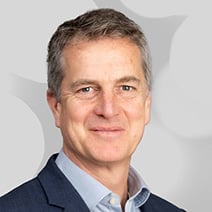
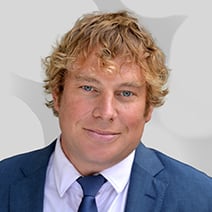
Peter Michaelis and Simon Clements discuss the drivers of returns, the stock and asset allocation changes they have made, and where they see the opportunities for the SF managed funds.
Peter M The Sustainable Future Managed range are risk-rated funds invested in equities and fixed income. The approach was launched in February 2001, nearly a quarter of a century ago, and for our largest and longest-lived strategy, the Sustainable Future Managed Fund, the long-term investment performance picture is strong, outperforming over 10, 15 and even 25 years. This supports our belief that we can deliver good financial outcome to clients by backing those companies which are growing as they, for instance, develop solutions to environmental problems or provide novel treatments to cure or prevent disease, or indeed use technology to improve our quality of life. We are however, disappointed that more recently returns have been weaker than we would normally expect. And the last quarter, and indeed the whole of 2025, saw our returns lag the peer group. In the next few minutes, we will explain why this has occurred, why it has been such an unusual and challenging market backdrop for our style of investing and importantly, why we have confidence in delivering stronger returns in the years to come. Simon and I will cover the performance of the main constituents of the Managed Funds; so Global Equities, UK Equities and Fixed Income. Then we'll look at our asset allocation view based on our economic outlook. And finally, I will touch on our engagement with companies and how we use our influence to promote better practice.
Simon Clements Global equity markets finished the year positively, delivering a third consecutive year of strong global equity market returns. The driver over the year was capital investment in AI infrastructure. AI infrastructure and semiconductors again led equity markets over the quarter. Leadership within this sector shifted with memory stocks, particularly in Asia, seeing a sharp improvement. Growing demand from AI data centres is pushing memory prices higher, broadening performance beyond the pure AI plays into the wider group of semiconductor names. There was also a shift in terms of leadership amongst the 'Magnificent 7', as Alphabet began to sell its own chips, creating competition for NVIDIAs GPU chips within the AI sector. Alphabet's Gemini updated 3.0 model was also launched, which is proving in itself to be the most sophisticated of the LLMs currently on the market. This has started to challenge the leadership of both OpenAI and NVIDIA. Over the quarter, the Global Equity Portfolio trailed its benchmark, given performance was driven by AI infrastructure beneficiaries. We've been increasing the portfolio exposure to this area of the market, but it remains a large part of the index at around a third, and this has created a performance headwind. One important area of portfolio was healthcare, which began to perform well as the sector's turnaround, which began in the third quarter, continued through the year end. Demand across the global healthcare system continues to normalise after two years of destocking following the COVID pandemic. Political pressure in the US also eased as several large pharmaceutical companies signed deals to build capacity within the US. From a stock specific perspective, the top performer for the period was Alphabet. Again, as discussed, it delivered a strong quarterly update and unveiled new AI software and announced additional AI focused partnerships, including a chip collaboration with Anthropic, which helped reinforce confidence in its ability to be competitive versus chat GPT and other rivals in the AI space. Encouragingly, demand is rising for Google's specialised AI chips, which are emerging as one of the few credible alternatives to NVIDIA's dominant offering. The Fund's long-standing overweight to healthcare was also positive, as the sector showed initial signs of a recovery from the challenging period post-COVID. Thermo Fisher Scientific and intuitive Surgical, both of which are held under our Enabling Innovation in Healthcare theme, were among the Fund's top performers. Trek's shares fell after the composite wood decking specialist reported underwhelming Q3 earnings and cut their guidance. Management lowered its forecast citing continued weakness in the repair and remodel space. And they also expected destocking within the distribution channel. Trex dominates the composite decking market with around 50% market share. But the number two player, AZEK, has been recently acquired by James Hardie, who themselves are a big player in the wider building products distribution market. The market is concerned that Trex's market share, around 50%, is under threat from AZEK, who control about 30% of the market in what is already a weakened market. Because of this, we acted quickly with our Trex position and we sold it down over the month of December. Security software specialist Zscaler was also a weak performer, despite delivering strong quarterly earnings. This was due to elevated market expectations and concerns the core Zscaler products were slowing down and the growth drive was shifting to their newly acquired red canary business. We still believe that the Zscalar core franchise can continue to grow rapidly and take share within the security space.
Peter M It was a highly unusual market environment in the UK over the past year. Benchmark returns were driven by a small number of the largest stocks, such as HSBC, British American Tobacco, Rolls-Royce, AstraZeneca, and Barclays. Leadership was also in stocks with value characteristics. Now our long-term approach focuses on companies we believe can deliver sustained growth while making a meaningful positive impact for people and the planet. As a result, of the five stocks I just mentioned, we hold only AstraZeneca. We also have a mid-cap growth style within the portfolio. Now, longer term, we remain confident that this is the right strategy, but it has proved a significant headwind in 2025. Now over the quarter, I would highlight the following movers within the portfolio. On the plus side, The Fund's top performer was Molten Ventures. This is a long-term holding which invests in a portfolio of high-growth technology software and financial companies. It's held under our Enabling SME's theme. It's really encouraging to see our patience in this holding beginning to pay off. AstraZeneca too performed well. It's held within our Enabling Innovation in Healthcare theme, and it has an exceptional record of innovation in drug development which helps to improve cancer survival rates.
Peter M Detractors over the quarter included 3i Group, which fell after it reported slowing growth at discount retailer Action. We expect the reduction in sales growth to be a short-lived effect and remain confident in 3i's long-term growth outlook. Wise shares also fell on concerns of slowing revenue growth from cross-border payments. And there's also a perception that stablecoins offer a threat to the business. We, however, believe the company is investing sensibly in a long-term platform that offers low cost and rapid currency transfer. And for remittance workers and those travelling or doing business overseas, it is a really compelling proposition. And we're pleased that in the most recent update, it has shown that growth is back on track. Our outlook for the UK portfolio is very positive. The underlying fundamentals of the businesses are encouraging. Growth has been strong and most holdings have exceeded market expectations for sales and earnings. And finally, valuations also look attractive. On average, our portfolio companies trade at a 13% discount to their five-year history. And in our view, this leaves the portfolio well positioned for stronger future returns.
Peter M 2025 and its final quarter saw positive, absolute, and relative performance from our fixed income portfolio. We maintained a strategic long duration position and this benefited the portfolio as gilts fell after a budget that actually showed more fiscal headroom than many had feared. Credit spreads remain tight, but these are supported by strong corporate financial conditions. There was some volatility from our position in Orsted, the Danish renewable energy developer, but overall the portfolio performed well. Our view is that the economic backdrop should deliver lower inflation, leading to ongoing reduction in interest rates over the coming year, and this would be supportive for our positioning.
Simon Clements We made changes to our asset allocation in December, following another strong year for risk assets in 2025. We entered the fourth quarter with a sizable overweight to both UK and global equities, a position we'd had since June. We believe economic momentum remains supportive for equities, reinforced by easy monetary policy and fiscal policy. However the growing importance of AI infrastructure investment to market performance increases the risk that a disappointment is possible in the early part of 2026. As a result, we reduced our overweight to both global and UK equities. We deployed the proceeds of this into the UK Credit Portfolio, which now has a modest overweight. In our view, weak economic growth is already priced in within credit markets, while inflation and interest rates are likely to fall through 2026 We modestly reduced our underweight positions in cash and gilts, both of which still remain underweight.
Peter M As owners of shares and providers of debt capital through corporate bonds, we are able to influence the companies that we invest in, or indeed those that we are seeking to invest in. We focus on areas which are material to the long-term success of these businesses, areas such as workforce safety, decarbonisation strategies and their impacts on biodiversity. This year we started a new area around the governance and ethical use of AI technologies. Overall, in 2025, the team made 138 specific requests for change at companies. And in total, we raised 474 environmental, social and governance issues with 187 businesses. There is a detailed report on our website if you're interested in more information. This quarter though, I would highlight three discussions we've had with businesses. Firstly, Becton Dickinson, the medical equipment manufacturer, where we've investigated a concern over ethylene oxide emissions from one of their facilities, and we've sought assurance on their environmental management. Then American Tower, where we have discussed ethical AI governance and requesting for a more comprehensive strategy for water use at their data centres. And finally, on biodiversity, we've collaborated through the Nature Action 100 initiative and met with the large pharmaceutical company Roche, and we've asked them for specific commitments to minimise nature loss and restore ecosystems. Individually, these are small interventions, but collectively, and over many years, they can have a big impact, reminding company management that looking after people and the environment is very much in the long-term interests of their business.
Simon Clements In terms of the outlook for global equity markets into 2026, we expect a shift away from the unusually narrow market leadership that has characterised markets in recent years. The dominance of a small number of 'Mega Cap' technology stocks will be altered by the growing competition within the artificial intelligence space, and this should support a broadening of overall market leadership. As funding for AI increasingly moves beyond hyperscalers balance sheets, it becomes more reliant on debt markets, pressure is likely to build to translate AI's significant potential into more widespread improvements and improving returns on investment. This broadening in leadership is expected to coincide with improving economic momentum supported by looser global monetary policy. As interest rates continue to fall, more cyclical areas of the economy should benefit particularly sectors that have struggled during this period of high rates. We see scope for improved activity across areas such as housing and non-residential construction, which has been through a prolonged downturn, and we take encouragement from the recent recovery in other sectors such as healthcare, and we feel this could be mirrored across the economy. In this environment, small and mid-cap stocks, which have been the most exposed to economic weakness, should perform meaningfully better as growth stabilises.
KEY RISKS
Past performance does not predict future returns. You may get back less than you originally invested.
We recommend this fund is held long term (minimum period of 5 years). We recommend that you hold this fund as part of a diversified portfolio of investments.
The Funds managed by the Sustainable Investment team:
- Are expected to conform to our social and environmental criteria.
- May hold overseas investments that may carry a higher currency risk. They are valued by reference to their local currency which may move up or down when compared to the currency of a Fund.
- May hold Bonds. Bonds are affected by changes in interest rates and their value and the income they generate can rise or fall as a result; The creditworthiness of a bond issuer may also affect that bond's value. Bonds that produce a higher level of income usually also carry greater risk as such bond issuers may have difficulty in paying their debts. The value of a bond would be significantly affected if the issuer either refused to pay or was unable to pay.
- May encounter liquidity constraints from time to time. The spread between the price you buy and sell shares will reflect the less liquid nature of the underlying holdings.
- May invest in smaller companies and may invest a small proportion (less than 10%) of the Fund in unlisted securities. There may be liquidity constraints in these securities from time to time, i.e. in certain circumstances, the fund may not be able to sell a position for full value or at all in the short term. This may affect performance and could cause the fund to defer or suspend redemptions of its shares. May invest in companies listed on the Alternative Investment Market (AIM) which is primarily for emerging or smaller companies. The rules are less demanding than those of the official List of the London Stock Exchange and therefore companies listed on AIM may carry a greater risk than a company with a full listing.
- May, in certain circumstances, invest in derivatives but it is not intended that their use will materially affect volatility. Derivatives are used to protect against currencies, credit and interest rate moves or for investment purposes. The use of derivatives may create leverage or gearing resulting in potentially greater volatility or fluctuations in the net asset value of the Fund. A relatively small movement in the value of a derivative's underlying investment may have a larger impact, positive or negative, on the value of a fund than if the underlying investment was held instead.
- Do not guarantee a level of income.
The risks detailed above are reflective of the full range of Funds managed by the Sustainable Investment team and not all of the risks listed are applicable to each individual Fund. For the risks associated with an individual Fund, please refer to its Key Investor Information Document (KIID)/PRIIP KID.
The issue of units/shares in Liontrust Funds may be subject to an initial charge, which will have an impact on the realisable value of the investment, particularly in the short term. Investments should always be considered as long term.
DISCLAIMER
This material is issued by Liontrust Investment Partners LLP (2 Savoy Court, London WC2R 0EZ), authorised and regulated in the UK by the Financial Conduct Authority (FRN 518552) to undertake regulated investment business.
It should not be construed as advice for investment in any product or security mentioned, an offer to buy or sell units/shares of Funds mentioned, or a solicitation to purchase securities in any company or investment product. Examples of stocks are provided for general information only to demonstrate our investment philosophy. The investment being promoted is for units in a fund, not directly in the underlying assets.
This information and analysis is believed to be accurate at the time of publication, but is subject to change without notice. Whilst care has been taken in compiling the content, no representation or warranty is given, whether express or implied, by Liontrust as to its accuracy or completeness, including for external sources (which may have been used) which have not been verified.
This is a marketing communication. Before making an investment, you should read the relevant Prospectus and the Key Investor Information Document (KIID) and/or PRIIP/KID, which provide full product details including investment charges and risks. These documents can be obtained, free of charge, from www.liontrust.com or direct from Liontrust. If you are not a professional investor please consult a regulated financial adviser regarding the suitability of such an investment for you and your personal circumstances.


